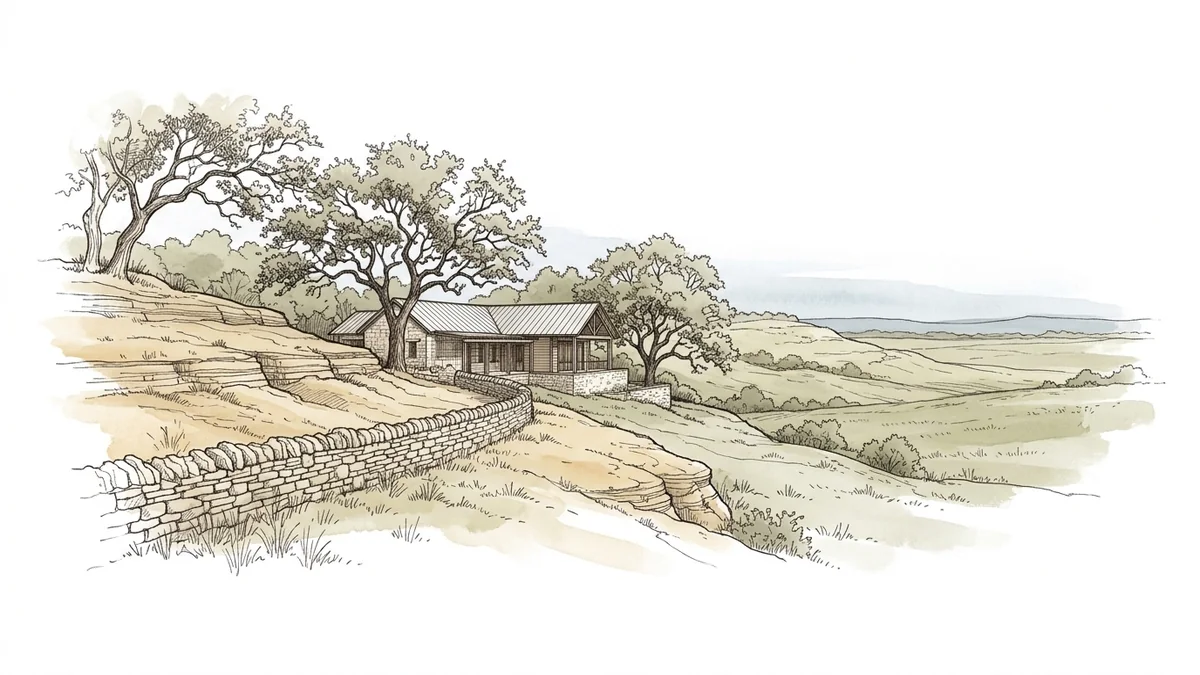
Williamson County · North Corridor & Acreage
Building Techniques & Regional Context in Georgetown, Texas
Custom residences from limestone west tracts to blackland clay lots, balancing slab engineering with quiet wood-and-foam wall assemblies.
Local Soil, Envelope & Structural Notes
Whether framing a custom residence in conventional 2x6 dimensional lumber with taped ZIP sheathing, opening a wide view wall with a structural steel girder, or drying-in a detached metal shop, Georgetown conditions shape three core decisions:
- Geology & Slabs: Shallow Edwards limestone and caliche require rock trenching for utilities and drainage swales, paired with disciplined rainwater or well siting and low-slope roof uplift ties.
- Climate & Humidity: Continuous exterior air sealing paired with variable-speed HVAC and dedicated dehumidification keeps summer indoor humidity steady near 45-52% RH.
- Utilities & Site Infrastructure: Austin Energy, Pedernales Electric Cooperative (PEC), or regional Hill Country co-ops govern transformer distance, septic/well clearances, and optional interconnection.